What Valorant Champions Shanghai Group Stage Day 7 Delivered in 2026
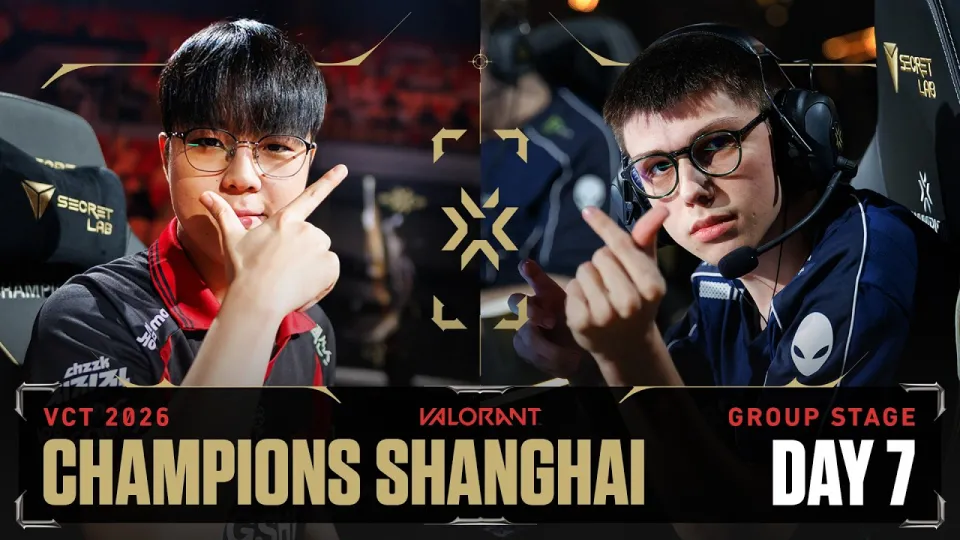
Video: VALORANT Champions Shanghai — Group Stage — Day 7
Need articles like this for your video? They help promote it on YouTube and Google — order them in the Telegram bot @sat_sit_bot. Articles with your video embedded are written and posted by the bot itself — on popular topical sites (no ads). Free trial — 50 articles.
· based on the channel VALORANT Champions Tour
Key takeaways
- Shanghai hosts the 2026 VALORANT Champions from September 24 to October 18, with 16 teams from Americas, CN, EMEA and Pacific.
- Day 7 of the group stage is the final stretch before playoffs: every map now decides seeding and elimination.
- The broadcast drew repeated complaints about tech pauses, which interrupted the flow of several maps.
- Chinese teams came under heavy criticism from viewers for losing eco rounds and 5v2 situations.
- Two different Masters champions in 2026 set up Shanghai as the tournament where the era question gets answered.
Valorant Champions Shanghai is the 2026 world championship, and Day 7 of the group stage is the point where the 16-team field stops being a story about potential and starts being a story about who survives. Sixteen rosters from Americas, CN, EMEA and Pacific arrived in Shanghai to fight for the biggest trophy of the year, and the group stage broadcast on the VALORANT Champions Tour channel captured both the highs and the friction of that fight. For live updates, brackets and announcements between match days, the official hub is VALORANT Esports on X.
What the Day 7 broadcast actually covers
Day 7 is a full group-stage matchday block, not a highlight reel, and it follows the standard VCT broadcast rhythm: analyst desk, map veto context, then complete maps with observer cuts and replay breakdowns. The event runs from September 24 to October 18, so the group stage sits in the first half of that window and Day 7 lands near its end, when standings are tight and tiebreakers loom.
What that means for a viewer:
- Matches are best-of-three in the group phase, so a single map loss rarely ends a series but always changes the math.
- Seeding matters — group placement decides which playoff bracket side a team enters and who they avoid in the first round.
- The veto is often the real story, especially when a team's comfort map gets banned out and the set strategies collapse.
Tech pauses and why the chat would not let them go
The most repeated complaint around this broadcast was the number of technical pauses, and it is a fair one to raise because pauses change the tempo of a series. A pause after a pistol round or during a retake resets momentum, gives coaches a window to talk, and forces the observer and casters to fill dead air.
In a group stage where several teams are fighting for the last playoff spots, that matters competitively, not just aesthetically. A long break in the middle of a half can cool off a team that was stringing together rounds, and it can hand a struggling roster time to reset its economy plan and default structure. Production issues happen at every international event, but the density of them here became the dominant talking point in the comments, with viewers joking about an endless series of them and asking why the broadcast kept stopping.
The CN question after a rough group stage
The harshest thread in the audience reaction was directed at the Chinese representatives, and it was specific rather than vague. The criticism focused on losing rounds that should have been closed: eco losses, 5v2s that slipped away, and utility usage that looked scripted instead of reactive once the opponent broke the initial setup.
That is the classic international-tournament problem. Domestic dominance builds habits around set plays that work against familiar opponents; at Champions, the opposing IGL has watched those setups for months and prepares a counter. When the first plan dies, the mid-round calling has to take over, and that is exactly where viewers said the CN teams looked lost. The counter-argument from the other side of the chat was just as blunt — that stronger teams from other regions missed the event entirely, so the group stage field is not a clean measure of regional strength.
Reading the 2026 season through Shanghai
The context that makes this group stage interesting is the season that led to it. Two separate Masters events in 2026 produced two different champions, which is the clearest signal that the old hierarchy is not holding. New contenders have broken expectations, and Shanghai is where that shift either becomes permanent or gets reversed by a veteran core.
A few things to watch as the bracket forms:
- Map pool depth. Teams that can only win on two maps get exposed in a best-of-five playoff format.
- Retake discipline. Post-plant and retake rounds decide close maps, and the group stage already showed which teams panic under time pressure.
- Adaptation speed. The teams that looked best in Shanghai were the ones adjusting their default mid-series, not the ones with the cleanest set plays.
Common viewer questions about the format
Group stage confusion is normal, especially for viewers who drop in for one matchday. The 16 teams are split across groups, and the top finishers advance while the bottom teams are eliminated — which is why Day 7 results can knock a roster out without it ever playing a bad series. Ties are resolved by head-to-head and map differential, so a 2-0 win is worth more than a 2-1 grind in the standings.
Another frequent question is why the broadcast feels slower than a ranked game. It is not the players: the analyst segments, the veto, the tech pauses and the replay packages all add time, and a full matchday block can run for many hours. Watching the VOD with a spoiler-free approach — skipping the desk and watching maps in order — is the standard way to follow a matchday you missed.
Where to follow the rest of the tournament
The group stage is only the setup; the playoff bracket in Shanghai is where the world title is actually decided, and the schedule runs through October 18. For bracket updates, match times, and clip drops between broadcasts, the official channels are the fastest source: VALORANT Esports on X, plus the Twitch channel for live matches and the YouTube channel for full VODs. Social coverage also runs through Facebook, Instagram, TikTok and Kick.
Final thoughts
Day 7 of the Valorant Champions Shanghai group stage is a useful snapshot of a season in transition: two Masters titles split between different rosters, a CN contingent under real pressure, and a broadcast that kept fighting technical interruptions. The matches themselves delivered the kind of close, economy-driven Valorant that decides tournaments, and the audience reaction was as honest as it gets — praise for the teams that adapted, frustration for the ones that did not. This breakdown comes courtesy of the VALORANT Champions Tour channel, which carries the full matchday VODs and the official event coverage. Follow VALORANT Esports on X so you do not miss the playoff bracket reveal.
Source: VALORANT Champions Shanghai — Group Stage — Day 7 · Markdown version
Questions & answers
How does the Valorant Champions Shanghai group stage decide who advances?
The 16 teams are divided into groups, and the top finishers in each group move on to the playoff bracket while the rest are eliminated. Placement also sets playoff seeding, so a team's final group record affects which side of the bracket it enters and who it faces first.
Why were there so many technical pauses during the Day 7 broadcast?
Technical pauses at international LAN events usually come from server, hardware or observer issues, and this broadcast had an unusually dense run of them. Each pause resets momentum for the players and forces the desk to fill time, which is why viewers flagged it so heavily.
Is the Chinese region really weaker than the other regions at this event?
The group stage showed CN teams losing eco rounds and 5v2 situations, which points to mid-round adaptation problems rather than raw aim. That said, several strong teams from other regions did not qualify for Champions at all, so the group stage field is not a perfect measure of regional strength.
Where can I watch the full Day 7 matches without spoilers?
Full matchday VODs are posted on the official VALORANT Esports YouTube channel, and live matches run on the official Twitch and Kick channels. Watching maps in order and skipping the analyst desk segments is the simplest way to avoid spoilers.