What Rust becomes when a streamer server hands Stimpee the keys in 2026
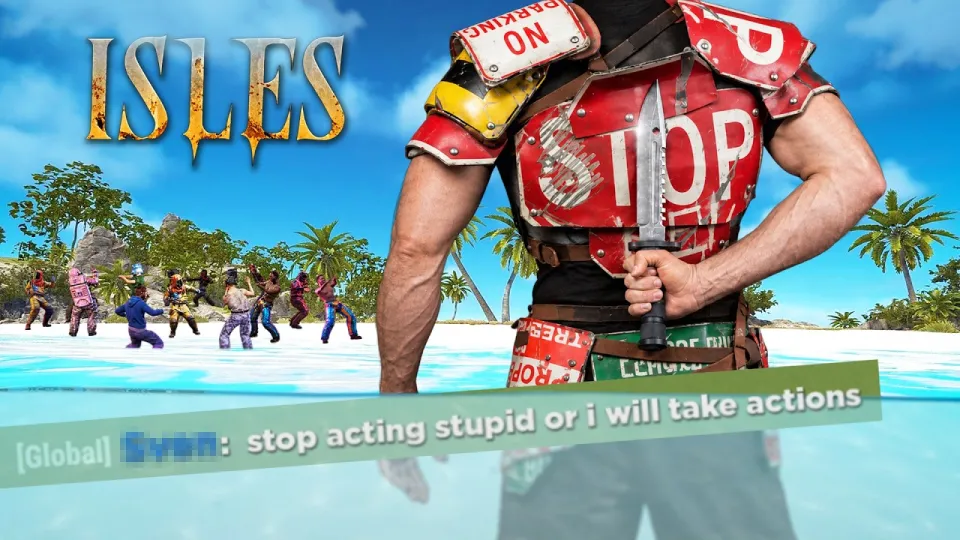
Video: Not Another Rust Streamer Server
Need articles like this for your video? They help promote it on YouTube and Google — order them in the Telegram bot @sat_sit_bot. Articles with your video embedded are written and posted by the bot itself — on popular topical sites (no ads). Free trial — 50 articles.
· based on the channel Stimpee
Key takeaways
- Stimpee returned to a Rust streamer server after years away, joining the invite-only "Rust Isles" project.
- Streamer servers are private, whitelisted Rust worlds where creators get free rein over clans, roleplay and raid rules.
- Admins reportedly searched Stimpee's inventory to strip weapons of mass destruction, a sign of how fast he escalates.
- Clan leaders recruit strangers with no vetting, then react badly when a new member steals a boat and strands the crew.
- The pirate theme promises theft and betrayal, yet server rules and chat moderation often punish exactly that.
Rust on a streamer server is still Rust, but the survival rules get rewritten by whoever runs the whitelist — and Stimpee's return to one after years away shows exactly what that means. In his latest video he joins the invite-only "Rust Isles" project, a private world built for content creators where clans, roleplay and admin intervention shape every wipe. You can follow his live sessions and see how long he lasts before the moderators step in at Stimpee's Twitch channel.
What a Rust streamer server actually is
A Rust streamer server is a whitelisted, privately hosted Rust world reserved for content creators, their friends and invited players, usually funded and moderated by a dedicated admin team. Access is by invitation only, so the population stays small, everyone knows everyone, and the social drama becomes the main content rather than raw survival.
On a normal official or community server you meet strangers, get raided at 4 a.m. and move on. On a streamer server the same 60 to 150 people share a map for a whole wipe, which changes the incentives:
- Reputation replaces anonymity — a clan leader who betrays you will still be on the server next week.
- Admins act as referees, not just anti-cheat, and can inspect inventories, teleport players or issue warnings.
- Events, roleplay hubs and themed maps (islands, pirates, factions) are common because they generate watchable moments.
- Rulebooks tend to ban or restrict offline raiding, excessive roof camping and spawn killing to keep streams watchable.
Rust Isles fits that template: a themed island map, clan recruitment, boats and a heavy emphasis on player interaction over pure PvP.
Why Stimpee gets moderated so fast
Stimpee is treated as a walking risk assessment the moment he lands on a streamer server, and the reaction is not paranoia — it is pattern recognition. Viewers note that admins seem to materialise whenever he is near a gathering, and at one point his inventory is reportedly searched so that weapons of mass destruction can be removed before he uses them.
That dynamic is the core joke of the format. A player who treats every social contract as a suggestion will always find the shortest path from "friendly new clan member" to "server-wide incident", and a moderated environment gives him more levers than a public server does: trusted access to clan bases, unlocked doors, shared boats and admins who cannot simply ban their own content.
It also creates a strange hierarchy. In a lobby of roleplay-focused creators, the troll becomes the most predictable person in the room, and the people who panic loudest in chat end up looking less composed than the supposed troublemaker.
The clan recruitment problem
Clan leaders on streamer servers routinely recruit players they have never played with, and Stimpee's run shows how badly that can go. He is taken into a crew with essentially no vetting, then hijacks a boat and leaves the rest of the group stranded on an island.
The interesting part is not the theft — it is the reaction. Instead of treating the betrayal as an opening for a revenge arc, a hunt or a negotiated ransom, the clan leader escalates into a public argument and keeps stewing about it afterwards. That is a wasted storyline in a format that lives on exactly this kind of drama.
A better playbook for clan leaders in 2026:
- Ask a recruit for their previous server history and check clips before handing over codes.
- Keep boat keys, code locks and explosives on a need-to-know basis for the first few days.
- Write a simple charter: what counts as betrayal, what happens after it, and who enforces it.
- If someone steals from you, turn it into content — bounty, manhunt, counter-raid — rather than a chat complaint.
Roleplay rules versus Rust instincts
The pirate theme of Rust Isles suggests theft, mutiny and double-crossing should be the point, yet the enforcement often pulls the other way. That mismatch between theme and rulebook is the most common complaint about roleplay-leaning streamer servers.
Rust's own systems reward exactly the behaviour that roleplay rules try to soften. Code locks, explosive raids, boat theft and offline raiding are all legitimate mechanics; a server that advertises a pirate fantasy but punishes a stolen boat is asking players to roleplay within a very narrow lane. When a rule is enforced only after someone gets upset, players cannot predict what is allowed, and the admin team ends up arbitrating feelings instead of rules.
Clear servers solve this by publishing the rulebook, naming the consequences and applying them evenly — including to the biggest streamer on the map.
What streamer servers do to normal Rust skills
Streamer servers are a different game from solo Rust, and the skills that transfer are narrower than they look. You still need to farm stone and wood, build a compact base, learn the monument layouts and hit your shots, but the meta shifts toward social engineering.
- Farming is safer. With a small population and offline-raid restrictions, a solo player can hold a base without a 24-hour guard rotation.
- Politics matter more than aim. Knowing who is allied with whom prevents more raids than a metal door ever will.
- Attention is a resource. Being on stream makes you a target and a celebrity at once; some players will farm for you, others will hunt you for the clip.
- Admin trust is leverage. Getting whitelisted, getting invited to events or getting a warning lifted can matter more than loot.
For a solo player watching this content, the practical takeaway is that the survival fundamentals — small footprint, hidden loot rooms, layered doors, no unnecessary noise — still decide whether you keep your base overnight.
Common questions about the format
Viewers keep circling the same doubts after every streamer-server video, and they are worth answering directly.
Is this real Rust? Yes, same game, same mechanics, different social contract. The map, crafting, raiding and combat systems are untouched; the whitelist and admin rules are the only additions.
Why do the admins watch one player so closely? Because that player reliably produces incidents. On a server where the population is small and everyone streams, one person's chaos becomes everyone's content problem, so moderators pre-emptively remove the tools that cause the biggest headaches.
Why does everyone sound so young? Voice chat on streamer servers is performance. People lean into characters, bits and exaggerated reactions because they are on camera, which reads as childish to players used to quiet solo lobbies.
Is it enjoyable for a normal player? Probably not as a main server. The appeal is the social sandbox and the guaranteed audience; if you want a fair fight and a quiet farm, a standard community server serves you better.
Useful links
- Stimpee on Twitch — live Rust streams and streamer-server sessions.
- Stimpee on Twitter — schedule updates and clip posts.
- Stimpee on Instagram — shorter clips and behind-the-scenes posts.
- Stimpee's Discord — community chat, server news and invite announcements.
The verdict on Rust streamer servers
Streamer servers are a social experiment wearing Rust's skin, and Stimpee is the variable nobody can control. The format works when clans treat betrayal as a story hook and admins enforce a rulebook instead of reacting to whoever shouts loudest; it fails when a pirate-themed island punishes piracy and a leader who never vetted a recruit expects loyalty anyway. What makes this run worth watching is that the survival mechanics stay honest — stolen boats, searched inventories and stranded crews are all consequences of decisions, not scripted events. Stimpee's channel is the author of this breakdown, and his Twitch stream is where the next invitation will either be honoured or immediately regretted.
Source: Not Another Rust Streamer Server · Markdown version
Questions & answers
What is a Rust streamer server?
It is a private, whitelisted Rust world hosted for content creators and invited players, usually with its own admins, rulebook and themed map. Access comes by invitation rather than a public server browser, and the population is small enough that everyone recognises each other across a wipe.
Why do admins on streamer servers target Stimpee specifically?
Because he reliably turns trust into chaos. Moderators on such servers act as referees and can inspect inventories or remove items, so they pre-emptively strip the tools that cause the biggest incidents rather than waiting for the damage.
Does roleplay ruin the Rust experience?
It changes it rather than ruins it. Roleplay servers trade unrestricted raiding and offline attacks for structured interaction, which suits creators who need watchable storylines but frustrates players who want the base game's full freedom.
Can a solo player survive on a streamer server?
Yes, but the threats are social rather than numerical. With a small population and offline-raid restrictions a compact, well-hidden base holds up, though alliances, clan politics and being recognised on stream matter as much as aim and farming speed.