How does a solo player survive and thrive in Rust against zergs and clans?
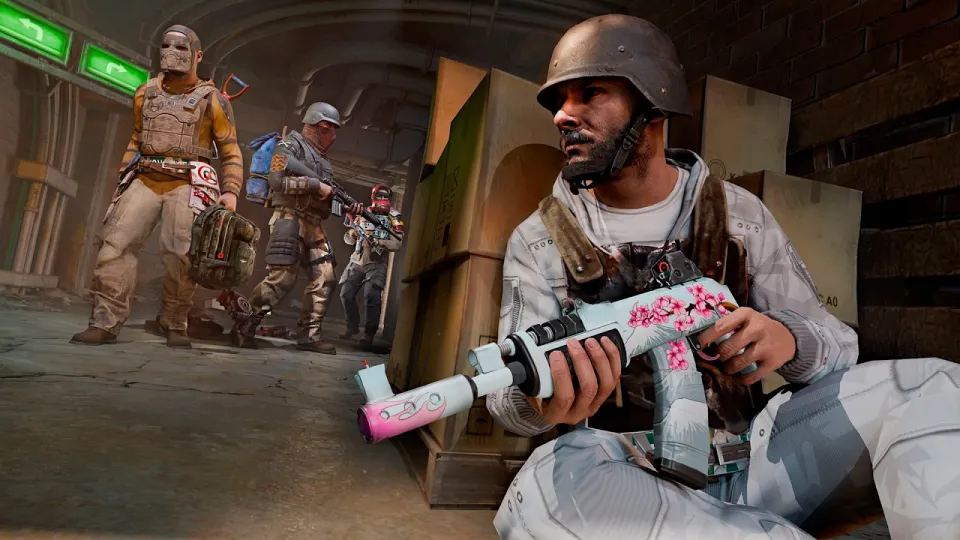
Video: THE SOLO MENACE – Rust
Need articles like this for your video? They help promote it on YouTube and Google — order them in the Telegram bot @sat_sit_bot. Articles with your video embedded are written and posted by the bot itself — on popular topical sites (no ads). Free trial — 50 articles.
· based on the channel SPiiCY
Key takeaways
- Solo Rust is about avoiding fair fights: pick targets by numbers, not by ego.
- A compact, layered solo base with a trap entrance costs less than a clan raid and buys time.
- Revenge raids work best when you hit a zerg's farm or flank while they are raiding someone else.
- Recoil control and FPS stability directly decide solo PvP outcomes in close-range fights.
- SPiiCY's solo video was published on 24 August 2026 and is built around a revenge raid storyline.
Solo play in Rust is survivable if you stop treating it as a fair fight: you win by picking targets, keeping a cheap layered base, and turning every raid against you into a revenge raid on the raiders' weakest side. A solo player cannot out-farm or out-number a zerg, but can out-think one — hitting farms, flanks and unguarded doors while the group is busy elsewhere. Tools that cut friction, like the RustEasy bonus page, exist to shorten the grind that solo players feel most.
What makes solo Rust different from clan and zerg play
Solo Rust is a resource-management game disguised as a shooter, because every fight you take is a fight you cannot replace with another player's gear. A clan member dies with a kit and gets handed a new one from a shared box; a solo player dies and walks back from a bag with whatever is left. That single asymmetry shapes everything: how much you carry, where you build, when you roam and when you log off.
The practical consequences are concrete. A solo player should never roam with the whole loot pool — one gun, one set of armor, enough meds to survive a reload. Groups win by volume of fire and by regearing fast; solos win by information, positioning and timing. That is why most solo highlight runs, including SPiiCY's solo series, are built around one continuous storyline — a wipe day, a base, a grudge — rather than random PvP clips stitched together.
How a solo base design keeps a zerg out
The right solo base is not the biggest one you can afford, but the one that costs a group more explosives than your loot is worth. Every layer of honeycomb, every extra door and every shotgun trap is a tax on the raider. A zerg raiding a 2x2 with four doors will spend sulfur it could have used on a real target, and that is the actual goal.
Practical rules that hold up on high-population servers:
- Build small and vertical: a compact footprint with multiple floors is cheaper to upgrade and harder to read from outside than a wide compound.
- Use a trap entrance. A bunker or a shotgun-trap corridor forces raiders to burn extra explosives or lose kits before they reach loot rooms.
- Split loot across at least two hidden stashes or small boxes, so a single breach does not end the wipe.
- Keep the base near a monument you actually use, but off the main road — visibility is a bigger threat than distance.
- Expect offline raids and plan for them: assume the base will be hit while you sleep, and design so the loss is recoverable in one farming run.
Viewers of SPiiCY's solo content regularly ask for the exact base build, which is why the creator points to a dedicated base design tutorial membership rather than explaining it in a comment.
How revenge raids actually work for a single player
A revenge raid is not about matching the group that raided you — it is about choosing the moment when their attention, players and doors are pointed somewhere else. Groups raid in cycles: they farm sulfur, they raid, they sort loot, they sleep. The solo player's window is the raid itself and the hour after it, when half the clan is hauling loot and nobody is watching the back wall.
A workable revenge raid sequence looks like this:
- Identify who raided you: check the door damage pattern, the direction of the breach and any dropped items left behind.
- Scout before you spend: count online members, watch the base for a few minutes, note which side has the fewest doors.
- Hit soft targets first — external turrets, wind turbines, a farm base or an unguarded shooting floor — rather than the main loot room.
- Bring exactly one raid's worth of explosives and a fast way out; a solo player who over-commits becomes the next clip.
- If the group is online and coordinated, walk away. The grudge is not worth a full kit against four players.
This is the core of the "solo menace" idea: the threat is not that you can wipe a clan, it is that you keep showing up where they are not looking.
Why aim and FPS decide solo fights
Mechanical consistency matters more for solos, because a single missed spray is a full kit lost with no replacement. Recoil patterns in Rust reward practice over raw sensitivity: learning one weapon's spray — typically the AK or the MP5 — and repeating it in short daily sessions beats constantly switching guns. Close-range fights on high-population servers are decided in under two seconds, so the player who lands the first three bullets usually wins regardless of armor.
Frame rate is part of the same problem. Stutters during a door push or a jump-down cost fights that aim cannot recover, which is why performance tools and launch options are a standard part of a serious solo setup — SPiiCY links a dedicated FPS optimization tool in the video description for exactly this reason. Viewers also report large frame gains from that kind of tuning, and on a 600-population server the difference between a smooth push and a freeze is the difference between loot and a death screen.
Typical questions from solo players and how to answer them
Solo players ask the same handful of questions after every wipe, and most of them have practical answers rather than motivational ones. The most common is about server choice: high-population official servers give more targets and more traffic, but also more zergs, while low-pop servers let you farm but starve you of PvP practice. A reasonable compromise is a medium-population server with an active wipe schedule, so you get fights without constant three-man door camps.
The second recurring question is about progression order. The reliable solo route is: tool cupboard and small base first, then workbench level one and a furnace, then a gun and a bag network, and only then a roam kit. Skipping steps to chase PvP early is how solos end up with a box of stone and no weapon. The third is about losing everything to an offline raid — the honest answer is that it will happen, and the counter is redundancy: spare kits in stashes, a second small base, and a rule never to store all sulfur in one room.
All links from the SPiiCY solo video
- RustEasy bonus and registration: https://rseasy.com/spiicy
- Base design tutorials and membership: https://www.patreon.com/c/spiicyrust/membership
- Alternative Patreon join link: https://www.patreon.com/join/spiicyrust
- FPS optimization tool (Hypertune): https://hptn.gg/spiicy
- Community Discord: http://discord.gg/HZjW3RYMGA
Final thoughts on playing Rust as a solo menace
Solo Rust rewards patience and preparation far more than raw aim, and the players who last a full wipe are the ones who treat every fight as a calculated trade. A small, trap-heavy base, a disciplined roam kit, one practiced spray and a well-timed revenge raid will do more than any amount of farming. The video breakdown by SPiiCY, published on 24 August 2026, follows exactly that arc — a solo run built around surviving a group and answering back. If you want to skip some of the grind on the way there, start with the RustEasy bonus page and put the saved time into practice on the recoil range.
Source: THE SOLO MENACE – Rust · Markdown version
Questions & answers
Can a solo player actually beat a zerg in Rust?
Not in a straight fight, but solos beat groups by avoiding fair fights entirely. Hitting farms, flanking during someone else's raid, and raiding the least-defended side of a base all work because a group cannot watch every angle at once. The goal is to make the group spend resources and attention, not to wipe them.
What is the best base size for a solo player?
A compact multi-floor base with a trap or bunker entrance is the standard answer, because it forces raiders to spend more explosives than the loot is worth. Splitting loot across hidden stashes and keeping the footprint small matters more than adding honeycomb you cannot afford to upgrade.
Does FPS really matter in Rust PvP?
Yes, especially for solos, since a stutter during a door push or a close-range spray usually means losing a full kit with no replacement. Players commonly report large frame gains from optimization tools and launch options, and on high-population servers a stable frame rate is as important as recoil control.
How do you recover after an offline raid as a solo?
Assume the raid will happen and build redundancy: spare kits in stashes, a second small base or a hidden fallback, and never all your sulfur in one room. After a raid, scout the damage pattern to identify the raiders, then decide whether a revenge raid on their weakest side is worth the explosives.